Heads Up for the 1996 Longleaf Seed Crop!
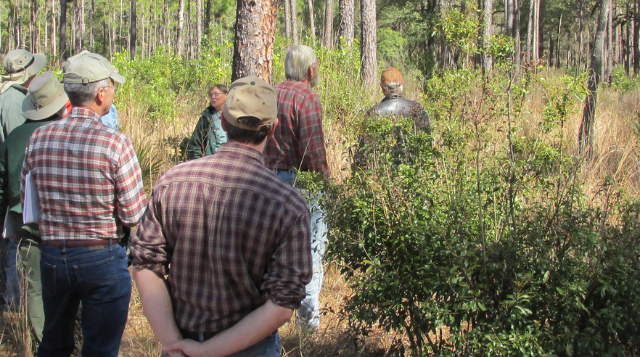
(We gleaned the following information from a longleaf pine management workshops recently put on by Tall Timbers).
As many of you know, longleaf pine seed production varies considerably from year to year and also from area to area. In a given area, five to ten years may pass between good seed crops. 1996 is shaping up to be a "mast year" with exceptional longleaf cone production! In fact, this bumper crop extends beyond the bounds of Florida and may cover the entire range of longleaf. This creates an excellent opportunity for naturally regenerating longleaf pine stands.
Longleaf seeds fall from the cones from mid-late October through November. Longleaf seed is larger and heavier than that of the other southern pines. The wind does not carry it far, the rule of thumb being roughly a distance equal to the height of the parent tree. These seeds cannot easily penetrate a heavy ground cover; they need bare mineral soil on which to germinate.
For natural regeneration of longleaf, it is best to clear away ground cover and duff with prescribed fire within a year before seed fall. Lands that are well-maintained through the use of regular prescribed burning should be in good shape to catch this year's seed fall. Land that has not been burned and has a thick ground cover of woody and herbaceous plants can be treated by mowing, disking, and/or raking to expose bare soil. Carefully applied, growing season burning may be another option in limited cases. You may want to consider letting some old wildlife food plots seed in to longleaf this fall. If your longleaf stand has a well-developed understory of gallberry and saw palmetto that has not been thoroughly burned in the last couple of years, it's probably not practical to get a good seed bed ready this year. But, if you begin a program of regular and frequent prescribed fires, you can have the stand ready for the next good seed crop.
Longleaf seed germinate soon after seed fall, usually within the first week. Look for seedlings on your land beginning in December. If an adequate number of seedlings are present, leave the areas you intend to regenerate out of your burning schedule for at least one season. Longleaf pine seedlings need protection from fire until they are at least one year old.
To take advantage of this year's good longleaf pine seed crop you need to follow these simple steps:
1) Check your trees for cones.
2) Look over the ground cover in the areas you want to regenerate and take
action to expose mineral soil as needed.
3) Check these areas for seedlings this winter.
4) If seedlings are present, leave the area out of the next season's burn.
Natural regeneration is not the only way the abundant longleaf seed will be used. For those interested in direct seeding longleaf this coming fall/winter or next year, expect greater seed availability and, possibly, lower seed prices than usual. Also, expect more longleaf to be sown in nurseries and more longleaf seedlings to be available starting a year from this fall. (Don't expect prices of high quality longleaf seedlings to come down much; the price of the seed is a very small portion of the cost of producing a seedling.) But, animals other than humans will harvest most of this bumper crop: insects, mice, squirrels, migratory birds, and other small animals will feast on the nutritious seeds--and hawks and other predators may take prey that is a bit fatter than usual.