Innovative Management of Cattle and Timber
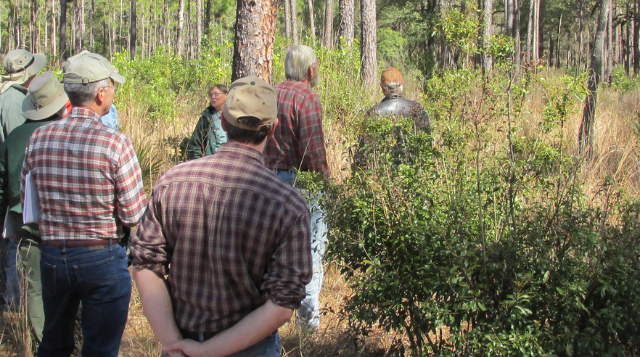
A few months ago, the Florida Chapter of the Society of Range Management toured the Lykes Brothers Ranch for an overview of its ambitious tree planting program. Here's a few of the interesting practices we heard about:
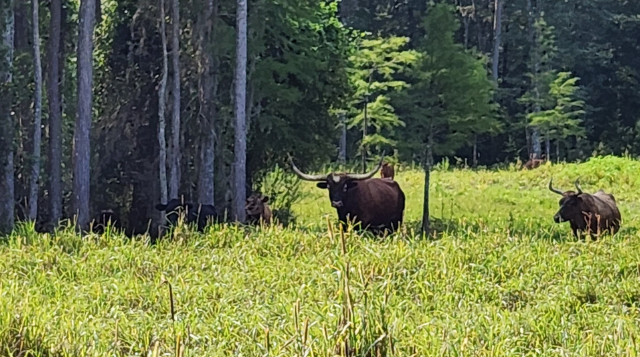
The ranch is planting about 5,000 acres per year on dry prairie and improved pasture, most of it with pine. All of the Glades County tract where the tour was conducted is leased for hunting. Cattle are grazed everywhere except where there are young pines less than three years old. Some prescribed burning is conducted, but the cattle, by grazing down the understory, reduce the need for fire. Three years after planting, cattle are placed on the land at a stocking rate of about 1 cow/30 acres on native range and about 1 cow/4 acres on improved pasture.
In the native forest on this land, longleaf pine and south Florida slash pine were the main commercial timber species. Now, north Florida slash, and even sand pine are being planted. In addition, the ranch managers are also trying "Caribbean" pine, ( Pinus caribaea), which is a Central American species. All the planting is done at 4' x 12' spacing. Wildlife corridors are left with wide roads/firebreaks at least every 1/4 mile. For fertilization they are trying out inexpensive Class A granular sludge. They plan to thin the south Florida slash at age 10-12 and clear-cut at age 15-20.
The harvested timber is hauled to distant mills by rail. The ranch has to settle for lower stumpage prices than those received by north Florida landowners because of the distance to market. Were it not for the railroad, this ranch might not be able to sell pulpwood at all. Hauling by truck to mills that far away would be uneconomical.
The ranch has some eucalyptus plantations and its own eucalyptus nursery. We presume that the eucalyptus is being grown for pulpwood. The wood is also being used for mulch. The ranch grinds and markets their own mulch. Like many hardwoods, these eucalyptus coppice (resprout from the stump) after harvest. Once the eucalyptus trees are planted, the grower will get several wood harvests before needing to replant. Imagine how that must cut down on stand establishment costs!
One of the trade-offs that we all face is balancing production with the other aspects of land stewardship. The ranch is converting a lot of dry prairie to planted pine. (Despite the name, dry prairies can be inundated for extended periods.) While this may mean more deer--in areas where the young pines have not yet shaded out most of the other vegetation--one trade-off is that values associated with treeless native range ecosystems may be lost.