Agroforestry
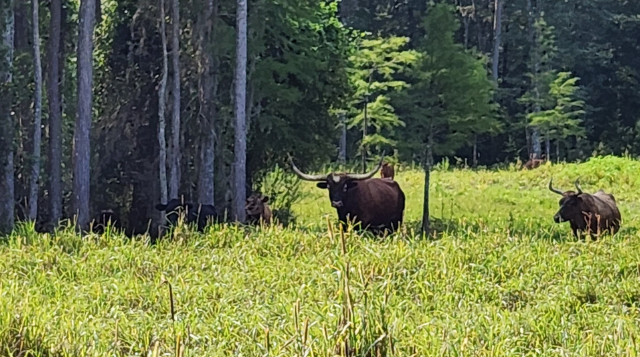
Agroforestry is the deliberate combination of trees and/or shrubs with crops and/or animals. The benefits of agroforestry practices are both economic and environmental:
- the total output per unit area of tree/crop/livestock combinations is greater than any single component alone,
- crops and livestock protected from wind are more productive, and
- new products add to the financial diversity and flexibility of the farming enterprise.
Agroforestry helps to conserve and protect natural resources by minimizing non-point source pollution, controlling soil erosion, and creating wildlife habitat. The benefits of agroforestry add up to a substantial improvement of the economic and resource sustainability of agriculture.
Specific agroforestry practices include:
- alley cropping
- windbreaks
- riparian buffer strips
- silvopasture
- forest farming
Additional Resources
UF-IFAS Extension Publications on Agroforestry
Opportunities to take advantage of these practices on private lands in Florida are being explored by the University of Florida Center for Subtropical Agroforestry (CSTAF). CSTAF is an initiative established within the University of Florida School of Forest Resources and Conservation (SFRC) to undertake activities in research, extension, and education and training related to agroforestry. Visit the CSTAF Web site to learn more about these opportunities.
- Return to Other Forest Values